The CISA has blazoned the continued civil backing for the CVE program, icing the ongoing operation of a system that’s essential for global vulnerability shadowing. This development came amidst a jacked position of concern within the cybersecurity assiduity, following reports that the current contract with The MITRE Corporation is listed to expire on April 16 without plans for renewal.
CVE, managed by MITRE, serves as an encylopedia with standardized IDs for given security excrescencies and support tools used by merchandisers, experimenters, and SOCs worldwide. MITRE has been entering backing from the Department of Homeland Security’s National Cybersecurity Division. CVE supports multitudinous security tools, fabrics, and protocols.
The urgency around backing was amplified by MITRE Vice President Yosry Barsoum, who intimately advised that a lapse in fiscal support would disrupt not only the CVE program but also the Common Weakness Recitation( CWE) action. Barsoum states that such a dislocation could affect vulnerability databases, software seller collaboration, automated discovery tools, and indeed public critical structure defense systems. The warning emphasized the critical significance of foundational systems in the overall cybersecurity ecosystem.
In a visionary response to the adding concern around centralized backing, members of the CVE Board lately blazoned the conformation of the CVE Foundation, a nonprofit reality created to insure the program’s long- term sustainability and global impartiality. The foundation, which has been in development for over a time, aims to reduce dependence on any single government guarantor by transitioning CVE to a more community- driven governance model.
A statement from the founding group stressed the growing apprehension within the cybersecurity community regarding the future of such a pivotal system being reliant on a single point of backing. The program aims to enhance translucency, promote participated responsibility, and acclimatize flexibly as it evolves to address arising global challenges.
Meanwhile, other transnational players are taking way to make resemblant systems that support global cyber adaptability. The European Union Agency for Cybersecurity( ENISA) has launched the European Vulnerability Database( EUVD), a cooperative platform that summations vulnerability data from a range of public sources. This reflects a broader trend toward distributed, multi-stakeholder approaches to cybersecurity structure.
As the global security terrain becomes decreasingly complex and distributed, security operations centers must be equipped to reuse, prioritize, and act on vulnerability data with speed and perfection. This is where Secucenter delivers real value through their moxie. Secucenter’s advanced SOC capabilities enable real- time sapience, contextual trouble discovery, and nippy response, helping associations transfigure critical vulnerability data into decisive action
Category: Uncategorized
Top SOC Tools in 2026 for Detecting and Mitigating Cyber Threats
With the ever-growing market of digitalization, the looming negativity of cyber threats is just as evolving. As per CrowdStrike, 2024 witnessed the fastest recorded eCrime at 2 minutes and 7 seconds. However, for businesses who wish to grow their service boundaries, being on the internet is vital. This is where you invest in SOC tools that proactively monitor, detect, and mitigate cyber threats.
The Security Operations Center is a centralized unit that is assigned to monitor, detect, and deter cyber threats in real-time. It operates 24/7, using advanced SOC tools like SIEM, threat intelligence, and automation to protect an organization’s systems, data, and networks. For business continuity, a SOC team ensures the prevention of cyberattacks and minimizes damage.
Popular SOC Tools To Know About
SOC tools are mainly divided into two purposes: monitoring and staffing. Thus, we divide the two and dwell on the tools each of these uses.
a) SOC Monitoring
SOC monitoring is utilized by organizations to oversee their networks, systems, and servers proactively to ensure threats are detected at their earliest and diffuse its approach immediately. The tools MSSPs use for SOC monitoring are as follows.
1. SIEM( Security Information and Event Management) Tools
SIEM tools are used to collect and analyze data from multiple sources to identify threat patterns. They collect sources from firewalls, servers, and applications for a clear vision of the threat and provide valuable insights for SOC analysts to work with. SIEM also generates alerts when anomalies are detected, giving the SOC team the urgency to respond to them quickly.
Below is a list of organizations that offer SIEM tools, along with the features that set each one apart.
| SIEM Tools | Features |
| Splunk | Their SIEM tool is capable of ingesting data from several sources to identify threats better. Analyzes the data from the sources pulled to detect anomalies, vulnerabilities, and security technologies. Splunk SIEM can generate effective alerts from predefined rules and data collected for the SOC analysts to work with. They create dashboards that comprehensively list trends through graphs and charts. |
| IBM QRadar | It excels at detecting a wide range of security threats by correlating events from diverse sources. Can collect, analyze, and process large volumes of data from different sources at once to derive a concrete solution for the SOC team to work with. Monitors networks and makes alerts on security threats that weren’t notified on the log data. Prioritizes alerts that are critical and helps the security team to focus on what needs their attention. |
| Microsoft Sentinel | Utilizes advanced analytics and machine learning to identify threats and anomalies that might otherwise remain undetected. Scalability through cloud networks is easily possible as Sentinel is cloud-native and can handle massive amounts of data through the cloud and provide accurate security. Includes SOAR capabilities that enable automated responses to security incidents. |
| ArcSight | Has a powerful correlation engine. It means that Arcsight can analyze data in a high volume and detect threat problems that may have been missed under the radar. Provides comprehensive log management that ensures the data is collected and processed appropriately for analysis and mitigation of threats. SmartConnectors are essential components that enable the collection and normalization of data from various sources. These connectors streamline the integration of multiple security devices and applications into the SIEM platform. Allows the integration of threat intelligence feeds that keep the team updated on the latest threats and solutions to effectively detect them. |
2. EDR Tools (End-Point Detection Response)
EDR tools are focused on monitoring the endpoints of the system such as computers, servers, and mobile devices. These are helpful in indicating the pathways through which threats can enter end devices and mitigate them at its earliest.
Their solutions use behavioral analysis and machine learning to understand the pattern of threats that traditional antivirus tend to miss.
Here is a list of organizations that provide EDR tools, highlighting the unique features of each one.
| EDR Tools | Features |
| CrowdStrike Falcon | Focuses on detecting malicious behavior as it is rather than a signature-based detection. Due to this, identifying threats such as zero-day exploits can be blocked immediately. Its cloud-native architecture allows MSSPs to deploy and manage endpoint security across a large number of devices. Gives real-time visibility into endpoint activities, enabling security teams to promptly identify and investigate potential threats. Includes automated response that enables the security team to diffuse a threat and minimize its impact immediately. |
| SentinelOne | Utilizes behavioral AI to detect and prevent threats, including zero-day exploits and ransomware, without depending solely on signatures. Offers comprehensive insight into endpoint activities, enabling security teams to grasp the complete context of an attack. Provides a visual representation of attack chains, helping security analysts understand the progression of an attack and identify its root cause. |
| Carbon Black | Provides continuous endpoint visibility wherein activities like processes, file modifications, network connections, and registry changes are monitored 24/7. It offers a live response feature that lets security analysts remotely investigate and remediate threats on affected endpoints. It connects with threat intelligence feeds, delivering current information on known threats and attack methods. |
| Microsoft Defender For Endpoint | It delivers a clear picture of an organization’s security health, enabling it to minimize potential entry points for attackers. Offers ASR capabilities that aim at minimizing the areas attackers commonly target. This is particularly helpful because vulnerable documents and business data can be protected effortlessly with minimal security concerns. AIR streamlines security workflows by automating alert handling, leading to less manual work and quicker incident resolution. |
3. IDS/IPS( Intrusion Detection System/ Intrusion Prevention System) Tool
IDS and IPS are used to monitor the network traffic for suspicious activities and attacks. While there are numerous entries and exits throughout a network, IDS/IPS never fail to identify threat patterns.

IDS is equipped to passively detect and alert potential threats while IPS actively blocks malicious activities. These systems are crucial for identifying and deterring unauthorized access attempts, brute-force attacks, and malware infections for business continuity.
Here is a list of organizations that provide IDS/IPS SOC tools, along with the key features that make each one unique.
| IDS/IPS Tools | Features |
| Snort | Monitors network traffic in real-time to analyze packets that flow through for detection of anomalies. Utilizes a rule-based system, which means threats are apprehended based on the rulebook of signatures. Rules can be customizable and flexible to the users’ needs. This allows for custom detection of threats and adaptation to the evolving cyber landscape. |
| Suricata | Introduced to handle high-volume traffic through multiple sources. This agile tool utilizes the processing of multi-core CPUs to power its multi-thread architecture, enabling suitable defense in different environments. It can automatically detect threats across a wide range of network protocols. This induces an effective position to expose hidden anomalies within various network traffic types. It uses signature-based detection and behavioral-based analysis to understand the threat pattern. This can also be customized to the users’ requirements for security protection. |
b) SOC Staffing
SOC staffing is essential for MSPs and MSSPs as the growing cybersecurity needs can keep their in-house team occupied more than their capabilities. In such cases, turning to outsourcing professional SOC staff can be an effective way to compensate for the skill gap yet address cyber issues of organizations swiftly.
Once MSSPs can get their team together, they’ll train on the SOC tools they employ to aid their clients and ensure they are ready to attend. Most of the tools that they use are mentioned above. However, a few tools used to aid SOC staff and measure their performance are listed below.
Also Read: Top SOC Trends in 2026
Threat Intelligence and Knowledge Management Tools
Threat intelligence platforms are often used by SOC analysts to proactively collect, analyze, and share security information within the organization to stay ahead of cyber threats. Tools that facilitate this process are:

- Anomali ThreatStream: This tool aggregates anomalies and threats from multiple sources transforming them into actionable insights for SOC analysts to work with.
- Recorded Future: Built to identify threats early, prioritize risks efficiently, and tackle key concerns proactively. This solution helps organizations prevent threat actors before they can attack.
- MITRE ATT&CK Navigator: This is a free, web-based framework that helps SOC analysts understand adversary tactics, techniques, and purposes. It is a key asset for MSSPs to provide proactive cyber solutions.
Training and Simulation Platforms
Cyber threats are growing uniquely and are smarter than ever. SOC analysts are responsible for mitigating it promptly.

Through training and simulation sessions, analysts know what’s new in the cyber world, adopt methods to mitigate them, and stay constantly updated. Programs that offer simulation experience to SOC analysts are:
- Immersive Labs: Provides gamified challenges to SOC analysts for an immersive experience and learn from the tasks.
- RangeForce: Offers interactive cybersecurity training sessions with modules and examples for SOC professionals to be aware of.
- Cyberbit Range: A training platform made to train professionals through real life threat simulations and educate them on the ways to tackle them.
Also Read: Top SOC Challenges in 2026
How Do SOC Tools Ensure Safe Business Practices?
As much as SOC expertise is important in maintaining and managing the cyber barriers of a business, SOC tools ensure secure business practices more effectively and simultaneously with manual labor. But, that’s not it, let’s venture more about how SOC tools build the wall of safety for businesses.
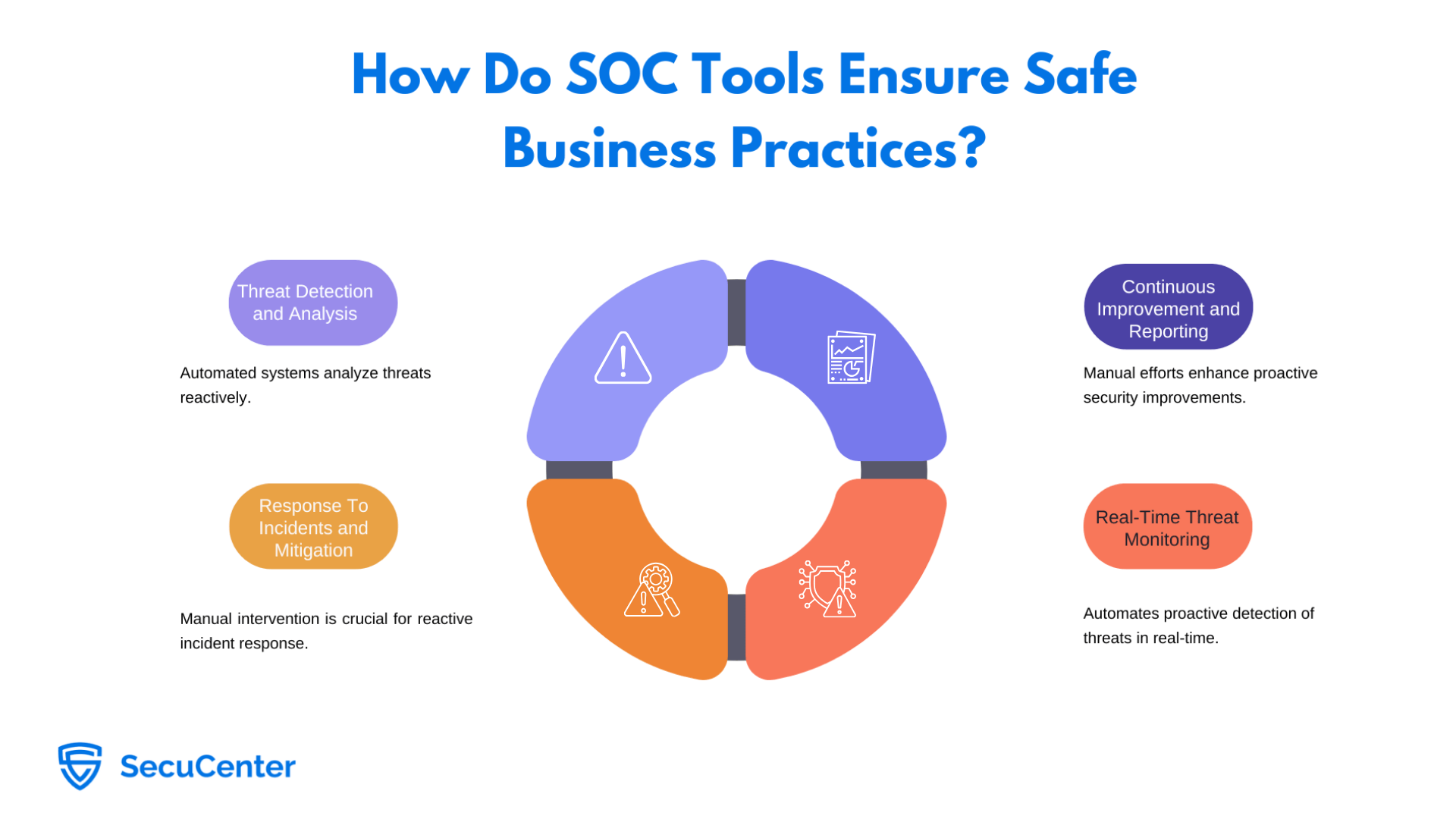
- Real-Time Threat Monitoring
SIEM tools are put in place to detect anomalies in real time and address their purpose. End-point Detection from various sources provides aggregate logs of those who enter the network and trace malicious activities if unusual patterns are detected.
- Threat Detection and Analysis
Introducing AI to the industry, many AI-driven threat detection tools have emerged that actively and effectively crawl through networks, systems, and servers to detect threats.IDS assists MSPs and MSSPs in helping businesses detect and eliminate unauthorized intrusions promptly.
- Response To Incidents and Mitigation
Incident response and mitigation tools in SOC are responsible for managing and maintaining cyber security. Once, they detect an unusual anomaly, automated responses are deployed to minimize their presence and further movement into the system. Tools like SOAR streamline the investigation and mitigation of threats effectively.
- Continuous Improvement and Reporting
Automation tools are used to find trends in past attacks to forecast areas that need improvement and make efforts to nullify them. With their comprehensive interface, MSPs and MSSPs can report their progress to businesses promptly.
Secucenter Offers Trend-Foward Cyber Solutions
Recently, the development of new SOC tools are seen to be AI-driven and aimed at easing routine manual tasks, cancel out false alerts and identify the complex natures of new cyber threats. WIth such developments, placing an antivirus and crossing fingers it protects organizations’ privacy is only the tip of the iceberg. At Secucenter, we believe having a team of professional SOC experts to oversee your clients’ security barriers is highly effective.
For this purpose, we introduce you to our dedicated services for SOC monitoring and SOC staffing. Our team of highly trained specialists is proficient in the leading SOC tools, ensuring seamless integration and cost-effective security solutions tailored to your needs.
Game-Changing SOC Trends in 2026: AI, SOAR & XDR Shifts
Cybersecurity and threats are terms that affect not just businesses but also people and their privacy. Now that we know what the subject is, let’s get into the actual part- its growth and effect amongst internet users. SOC trends for 2026 have evolved in sophistication based on these factors . A compiled and comprehensive report from CrowdStrike showed the following statistics:
- 30+ adversaries newly discovered and named,
- The fastest recorded eCrime timed at 2 minutes and 7 seconds, and
- 75% increase in cloud intrusions.
Cybercriminals are after your information mainly to gain access to financial information and/or use personal information to extort something. In the business world, it’s usually the latter for financial gain. In 2024, there was a substantial increase in reports against cyberattacks made by businesses and MSPs which only shows an upward graph of how they’ll be demanded more in 2026.
Furthermore, SOC trends in the industry are predicted to create an uproar as it will be added as an extension to basic cybersecurity products.
Top Security Operation Center (SOC) Trends To Look Forward To In 2026
The future of Security Operations Centers (SOC) is evolving rapidly with advancements in automation, AI, and cybersecurity frameworks. Here are the key SOC trends in 2026:
- Cloud Native SOC Services
- Security Orchestration, Automation, and Response
- AI and Automation
- Zero Trust Architecture
- Quantum Computing and SOC Integration
- Proactive Threat Intelligence
- Redefining Human Roles in SOC
- Managed Detection Response
- eXtended Detection and Response (XDR)
1.Cloud Native SOC Services
What is it?: Businesses are shifting their work and data to a more accessible and remote location like the cloud. With such a shift comes innovation in SOC trends to introduce and develop cloud-based SOC services.

Cloud-native SOC services offer an expansive service to monitor, detect, alert, and respond to unusual activities spotted on the cloud. These services concentrate on the scalability, accessibility, and security of distributed IT environments while ensuring vulnerability is minimized to zero.
Why Does It Matter in 2026?: The work environment has drastically changed, and moving forward, it will be more flexible, i.e., completely cloud-based, and communicated. With such a revelation, here are all the reasons why cloud-native SOC services matter in 2026.
- Scalable For Small and Medium Enterprises: MSSPs looking to offer their services to small and medium enterprises are shifting toward offering this SOC service. They offer flexibility without compromising security when the range of data and personnel is under a controlled cloud.
- Remote Management: As mentioned above, the remote environment of businesses urges MSSPs to offer secure and safe cloud management through SOCs.
2.Security Orchestration, Automation, and Response
What is it?: SOAR platforms are becoming a crucial part of SOC services. They define a definite path, protocol, and routine that helps engineers streamline their security processes efficiently.
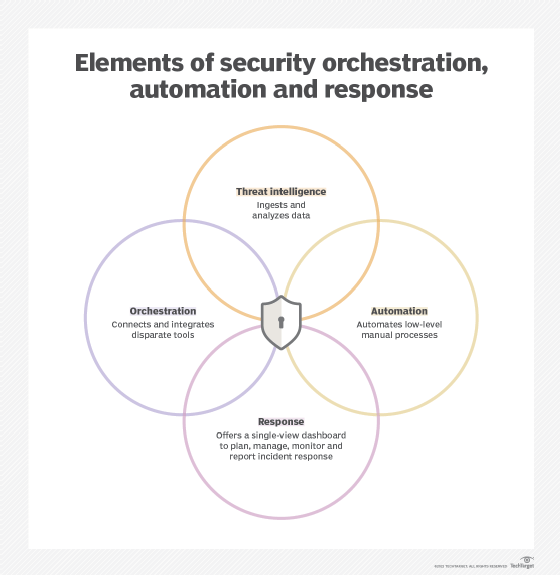
image source: Techtarget
Moreover, it effectively automates routine tasks and incident response, empowering human analysts to prioritize and tackle more complex and strategic activities.
Why Does It Matter in 2026?: SOAR is highly relevant in 2026 due to the evolving complexity and volume of cyber threats, as well as the growing demand for efficiency in SOCs.
- Automation of incident responses: SOAR platforms are dedicated to simplifying tasks such as incident investigation, management, threat containment, and termination. With automation, more than half of manual tasks through every step are reduced.
- Streamline operations: SOAR platforms implement diverse security tools and systems into a simplified ecosystem, streamlining operations and improving efficiency. By consolidating data and performing advanced threat analysis, they enhance an organization’s security posture, improving visibility and enabling effective threat detection and response.
3. AI and Automation
What is it?: As we know the prominence of artificial intelligence has entered every industry, including SOCs. AI has been part of SOC trends and is fully fledged to operate multiple tasks at a time.

Through machine learning and automation, SOC services are looking at an optimistic, efficient, and minimal manual error.
Why Does It Matter in 2026?: Organizations who have implemented AI and automation into their SOC services already reported seeing more than a 50% reduction in response times and improved threat mitigation.
AI technologies can scan through vast amounts of data and networks to derive information about various anomalies that need to be addressed and through automation, these anomalies can be mitigated efficiently, reducing delay at every step of the process.
3. Zero Trust Architecture
What is it?: Zero-Trust Architecture is highly being demanded within the MSSP industry turning into a SOC requirement ready to take centre stage.

Image source: Gartner
This system assumes all networks to be hostile, enabling verification for every access made. It is designed to reduce the risk of data breaches and unauthorized access to sensitive data from known and unknown sources.
Why Does It Matter in 2026?: Threats don’t limit themselves to the size of an enterprise, they attack in every way possible. Zero-trust architecture, thus, becomes a crucial SOC tool that will help MSSPs assure their clients’ safety and security in the long run.
- Constant verification: Threats can be internal and external. Continuous verification of users across all networks ensures all who access the system’s database are authorized users and free to use it.
- Strengthen overall security: ZTA micro-segments the network which reduces the potential impact of breach. Since each segment acts independently, a breach is bound to not affect the entire network.
4.Quantum Computing and SOC Integration
What is it?: One of the most innovative approaches in the SOC industry is quantum computing and resistive security. A method developed with cryptography to disable attacks from quantum computers.

These systems use post-quantum algorithms that are resistant to the immense computational power of quantum machines, ensuring secure encryption, authentication, and data protection.
Why Does It Matter in 2026?: We can’t stress enough how hackers and attackers can go to any length to bring down an organization by accessing their sensitive information. In 2026, the growth of this system will grow in demand mostly from large enterprises.
- Resistant Algorithms: Implementing quantum-resistant algorithms will become a key focus for SOCs, ensuring that encrypted data remains protected against the advanced capabilities of quantum computers. These algorithms are designed to safeguard sensitive information and prevent potential breaches in a post-quantum era.
Also Read: Top SOC Tools In 2026
6. Proactive Threat Intelligence
What is it?: Proactive Threat Intelligence is a form of identifying threats through predictive insights. These are gathered and analyzed through sophisticated tools that are developed to mitigate real-time and quickly growing cyberattacks.

Why Does It Matter in 2026?: To act upon cyberthreats, SOC services enable advanced SOC monitoring that works as intelligent and proactive threat mitigation.
- Real-time threat identification: 2026 is looking at evolving variants of cyberattacks that are more dubious to deal with. Through proactive threat intelligence, the system can scour cyberattacks, respond to it and offer immediate remediation. This act helps in ensuring organizational networks, systems and servers don’t end up in unexpected situations.
- Proactive Threat Strategies: Considering the level of threats every organization deals with, having reactive measures can only do a little help. By having objectives that are sector-specific, SOC engineers can concentrate and customize their services accordingly.
7. Redefining Human Roles in SOC
What is it?: As cyberthreats evolve, AI and human analysts are foresighted to work side by work and not replace one over the other.

A future of streamlining, speeding and redefining the roles of human analysts in the SOC industry will shape their purpose in the coming years.
Why Does It Matter in 2026?: The evolution of AI and machine learning has brought the presumption that human analysts might get replaced but this is far from the truth.
Human analysts have the capabilities to offer their services higher level tasks and are often stuck with routine daily works. These repetitive works can be automated with AI while human analysts can take on more advanced tasks.
8. Managed Detection Response
What is it?: MDR basically assembles a team, apart from automation, to detect, analyze, and resolve any cyber threat on the network, endpoints, and systems.

Relying services solely on AI is not a matter of present or future, it is a constant requirement to have human assistance side by side.
Why Does It Matter in 2026?: MDR offers various benefits that take cybersecurity a long way.
- 24/7 monitoring and response: Managed security service providers and SOC engineers ensure your networks and systems are constantly watched for potential threats and respond to them immediately.
- Bridging cybersecurity skill gaps: With the growing needs of cybersecurity, there are few professionals and engineers in the market. Rather than contemplating the skill gap, get them managed through MSPs who offer quality MDR services.
Also Read : Top SOC Challenges in 2026
9.eXtended Detection and Response (XDR )
What is it?: XDR is gaining quite the popularity for its holistic approach to enabling cybersecurity. Extended Detection and Response is a system where endpoints, networks, servers, and devices are connected to a single platform.

Image Source : Microsoft
As a whole, it helps in detecting, investigating, and narrowing down the source of threat in a unified manner.
Why Does It Matter in 2026?: There are multiple reasons why XDR is a growing SOC trend that will continue to evolve.
- Unified threat management: Cyberthreats attack from every direction. Through XDR, a unified platform can smartly detect cyberthreats’ routes and mitigate them efficiently without having to run around to find the source.
- Automation for alerts: SOC engineers are often hung up on regular and time-consuming regular tasks. Through EDR, these tasks get automated and alert fatigue can be resolved easily.
Secucenter’s Contribution To SOC Trends
As a budding SOC company, we are on the radar to onboard the latest innovation in our tools. We provide advanced SOC monitoring and SOC staffing to our clients who wish to add that extra layer of protection along with their current suite of cybersecurity.
In 2026, we forecast a vertical expansion of SOC trends with new tools in the industry to aid our customers with a strong wall of defense and ensure their safety through and through.
Frequently Asked Questions
1. How does AI impact SOC operations in 2026?
AI will streamline major and minor SOC operations making cybersecurity even more efficient and reliable. It enhances threat intelligence, finds threat pathways, provides intelligent threat response, and many more.
2. What challenges do businesses face in modern SOC technologies?
One of the main challenges in the skill gap that was discussed above. Apart from that, modern businesses find difficulty with high implementation costs, keeping track of technological changes, and the wariness of cyber threats wandering the digital world. These concerns can be tackled by utilizing managed service providers who offer cybersecurity such as us.
3. How do you choose the right SOC service provider?
Choosing the right SOC service provider involves evaluating their expertise in threat detection and response, 24/7 monitoring, and the use of advanced tools like AI and SOAR. Their experience with your industry, scalability, reporting transparency, compliance support, and ability to integrate with your existing security infrastructure effortlessly.
Zero-Day Attacks On Firewalls: Fortinet Issues Warning
Fortinet issues warning on a new Zero-Day attack on Fortinet Fortigate firewall devices with management interfaces exposed to the public. The campaign began around mid-November 2024 by accessing management interfaces, creating new admin accounts, changing configurations, and bypassing SSL VPN for lateral movement. The threat actors are unknown and they have taken advantage of this vulnerability to extract credentials using DCSync.
For context, a Zero-Day is an unknown software vulnerability exploited by hackers to gain entry into vulnerable networks, servers, and systems. It is called Zero-Day because it occurs before an organization becomes aware of it, giving them zero days to address the issue.
The firmware devices that were impacted and still underway on recovery range between 7.0.14 and 7.0.16, which were released in February and October of 2024.
Fortinet has confirmed that the attacks came in four waves:
- Scanning and reconnaissance.
- Configuration changes (e.g., enabling new admin accounts).
- Creating local user accounts with VPN access.
- Credential extraction for lateral movement.
Currently, Fortinet has given their response to update their firmware and minimize public-facing interfaces for controlling future threats.
Simply put, a fault in a firewall was used to gain bigger access, create an entryway for hackers, and move deeper into their networks. As a SOC service provider, we’d agree no security is too much security. If you harbor confidential data that can put an entire organization or a chain of clients at risk, then having 24/7 SOC monitoring can save you potentially costly losses and lawsuits.
Volkswagen Group’s Data Breach Exposed Over 800,000 EV Customer’s Information
The mere thought that our personal information from a car company’s database can be spooky enough, let alone it happening eight hundred thousand times. However, this is the scenario of Volkswagen Group whose data breach and poor configuration of data resulted in the exposure of over 800,000 EV customer’s information.
According to Chaos Computer Club, the data remained in the publicly accessible platform for months. This breach showed the precise GPS location of its users and contact information. Volkswagen’s software subsidiary, Cariad, contained accurate personal data that was synced with Amazon’s cloud facility but poorly configured. This gap left a loophole for free access to private customer information. The vulnerable customers included ordinary people, high-profile executives, and government workers who faced malicious risks if not reported.
The pattern of data breaches is not limited to Volkswagen. Kia was also informed about a similar security flaw that could have compromised the personal information of millions. Ferrari, BMW, and Porsche are more brands that have come under intense public scrutiny due to their inadequate customer security systems.
This breach shed light on the reliability of data privacy in the automotive sector. As a SOC service provider, Secucenter finds the need to protect data and information across platforms and sectors with not just one but multiple cybersecurity shields.
Major Data Breach At Cisco: Intel Broker Steals 4.5 TB Of Value Data
The hacker group “Intel Broker” has successfully breached Cisco’s network, allegedly claiming to have exfiltrated approximately 4.5TB of sensitive data tied to various Cisco products. The breach reportedly occurred after Cisco inadvertently left its DevHub instance exposed, granting unauthorized access to critical systems.
Threat actors identified as “@zjj,” “@IntelBroker,” and “@EnergyWeaponUser” are said to have exploited this vulnerability, downloading sensitive files and sighting poor security at major institutions. IntelBroker has since claimed responsibility for the breach and the hackers are alleged to offer the data for sale on the dark web.
The exposed data includes proprietary Cisco products such as
Cisco C9800-SW-iosxe-wlc.16.11.01,
Cisco IOS XE & XR,
Cisco Identity Services Engine (ISE),
Cisco Secure Access Service Edge (SASE),
Cisco Umbrella, and
Cisco Webex.
Hackers have shared some files with the cybersecurity community to validate their claims and attract buyers for a purported “full version” of the stolen data.
If the breach is confirmed, it could lead to serious implications for Cisco’s business. Proprietary software and platforms like Webex and Umbrella may face exploitation risks, while organizations relying on these products could encounter vulnerabilities. Cybersecurity experts are urging users of Cisco technologies to remain vigilant and monitor for security updates or patches. Cisco has not yet commented publicly on the breach, leaving the industry closely monitoring its response and future security measures.
When it comes to cybersecurity, one shouldn’t blink at the possibility of a hack. Targeted attacks such as these not only affect the organization itself but also its clients in extension. There are multiple ways to keep your data secure, but Secucenter offers you a more concentrated solution called SOC monitoring. Our SOC engineers will be proactive in monitoring your systems and endpoints for unusual activities and report in case it is detected. This has been beneficial for businesses, allowing them to clock out or take a break without worrying about exposing their confidential information.
Deloitte Compromised and Data Confiscated: Brain Ciper Ransomware Allegedly Stole 1TB Of Data
Deloitte, one of the Big Four accounting firms, has found itself in a predicament. On December 4th, reports revealed that the ransomware group Brain Cipher breached Deloitte UK’s systems, stealing up to one terabyte of data and digital materials. The infamous group emerged in June 2024 and gained notoriety for invading Indonasia’s National Data Center which disrupted 200 government institutions.
Brain Cipher alleging infiltration has challenged Deloitte with threats to release confidential information such as security protocol violations, analyses of contractual agreements, details about monitoring systems and security tools, and examples of compromised data. They have invited Deloitte UK representatives to a negotiation, however, Deloitte has not directly confirmed or denied this incident.
Despite strong security measures, hackers still find ways to breach your systems and steal sensitive data to use against you. Breaches like this expose the need to employ cybersecurity that completely protects your business and clients. This breach could impact Deloitte UK’s clients, confidential business data, financial records, and its professional reputation.
As cyber threats evolve, the need to consider proactive cyber protection approaches makes it an inevitable tool. SOC solutions proactively identify vulnerabilities, ensure regulatory compliance, and protect against evolving threats, all while being cost-effective. Secucenter welcomes you to explore the benefits and reasons to utilize our SOC solutions for that extra layer of safety.
How MSSPs Manage Talent Shortages and Skill Gaps in Cybersecurity
In the modern digital landscape, cybersecurity is a critical concern for businesses of all sizes. With the increasing sophistication of cyber threats, organizations must ensure their digital assets are protected. However, the cybersecurity industry faces a substantial talent shortage globally. According to ISC(2)’s Cybersecurity Workforce Study, there were approximately 2.8 million unfilled cybersecurity positions worldwide in 2021. This shortage poses a significant challenge for businesses trying to safeguard their data and systems.
To address this issue, many organizations are turning to Managed Security Service Providers (MSSPs). MSSPs offer specialized security services that are cost-effective and provide access to a broader pool of skilled professionals. By leveraging MSSPs, businesses can alleviate the burden of managing cybersecurity internally, addressing not only the talent shortage but also reducing costs and administrative headaches.
The Challenges MSSPs Face
Despite their expertise, MSSPs are not immune to the cybersecurity talent shortage. They must constantly evolve to meet client needs and combat emerging threats. To bridge skill gaps and manage talent shortages, MSSPs implement several strategic approaches:
1. Efficient Resource Utilization and Economics
MSSPs maximize resource efficiency by serving multiple clients with the same team. This model allows them to achieve better unit economics, which in turn enables them to offer competitive compensation packages that attract and retain top talent. By optimizing resource allocation, MSSPs can deliver high-quality services without overextending their workforce.
2. Diversified Talent Development
MSSPs cultivate diverse teams of cybersecurity experts, exposing them to various domains within the field. This diversity not only broadens their skill sets but also encourages ongoing learning and specialization. MSSPs support professional certifications and continuous education to keep their teams updated on evolving threats and technologies. By fostering a culture of continuous learning, MSSPs ensure their staff remain adept at handling a wide range of security challenges.
3. Continuous Training and Skill Enhancement
Continuous training is a priority for MSSPs to maintain a skilled and adaptable workforce. Regular training programs cover emerging threats, new technologies, and industry best practices. This proactive approach enables MSSPs to onboard entry-level talent and quickly elevate their proficiency in cybersecurity disciplines. By transforming raw talent into subject matter experts within a few months, MSSPs contribute to the overall growth of cybersecurity professionals in the industry.
4. Automation and Operational Efficiency
Automation plays a crucial role in MSSP operations. By automating routine tasks such as monitoring, incident response, and vulnerability assessments, MSSPs reduce manual workload. This allows their teams to focus on complex security challenges and strategic initiatives. Automation enhances operational efficiency and ensures that MSSPs can deliver consistent and timely security services to their clients.
5. Strategic Outsourcing and Partnerships
To effectively manage fluctuations in workload and maintain high service levels, MSSPs strategically partner with white-label providers or outsource non-core functions. These partnerships enable MSSPs to maintain round-the-clock service without overburdening their internal teams. For example, collaborating with a trusted partner like SecuCenter provides MSSPs with access to specialized support and comprehensive SOC solutions. This collaboration enhances MSSPs’ operational capabilities and ensures they can meet the evolving security needs of their clients.
Conclusion
Managed Security Service Providers (MSSPs) play a vital role in addressing the cybersecurity talent shortage and skill gaps. By implementing strategic approaches such as efficient resource utilization, diversified talent development, continuous training, automation, and strategic partnerships, MSSPs can effectively manage these challenges. Trusted partners like SecuCenter offer specialized support that enhances MSSPs’ operational capabilities, enabling them to deliver robust and scalable security services.
Discover how SecuCenter can empower your MSSP with comprehensive SOC offerings at SecuCenter.com. Partner with us to strengthen your SOC capabilities and meet the evolving security needs of businesses today.
The Benefits of White Label SOC Providers for Managed Security Service Providers (MSSPs)
Managed security service providers (MSSPs) are IT service businesses that specialize in providing security-as-a-service offerings for their customers. MSSPs typically establish a security operations center (SOC), which is responsible for continuous monitoring and protecting the infrastructure (networks, applications, databases, servers, etc.), But operating a SOC involves different challenges for MSSPs due to the rising talent demands and increased labor costs. One powerful solution that has emerged to address these challenges is the use of white label Security Operations Center (SOC) providers. In this blog, we will explore how partnering with white label SOC providers can help MSSPs achieve better scalability, reduce operational costs, and improve EBITDA margins.
Understanding White Label SOC Providers
A white-label SOC provider offers comprehensive security monitoring and incident response services under a client’s brand. This means MSSPs can deliver top-tier security services without the need to build and maintain their own SOC infrastructure. These providers offer various services, including threat detection, incident response, vulnerability management, and compliance monitoring.
Achieving Better Scalability
Scalability is critical for MSSPs aiming to grow their client base and expand their service offerings. Building an in-house SOC requires significant investment in technology, resources, and ongoing training. This can be a daunting task for MSSPs, especially those with limited resources.
White-label SOC providers offer a scalable solution. By leveraging their existing infrastructure and expertise, MSSPs can quickly scale their operations to meet the needs of a growing client base. This flexibility allows MSSPs to focus on acquiring new clients and expanding their services without the burden of building and maintaining a SOC from scratch.
Reducing Operational Costs
Operational costs are a significant concern for MSSPs, as maintaining a SOC involves substantial expenses related to technology, staffing, and continuous training. Hiring and retaining skilled cybersecurity professionals is particularly challenging and costly.
Partnering with a white-label SOC provider significantly reduces these costs. MSSPs can eliminate the need for a large in-house team and the associated expenses of recruiting, training, and retaining top talent. Additionally, the white-label provider bears the costs of maintaining and updating SOC infrastructure, allowing MSSPs to allocate their resources more efficiently.
Improving EBITDA Margins
EBITDA (Earnings Before Interest, Taxes, Depreciation, and Amortization) is a key performance metric for MSSPs. By leveraging white-label SOC providers, MSSPs can improve their EBITDA margins in several ways:
1. Lower Capital Expenditures: Without the need to invest in expensive SOC infrastructure, MSSPs can significantly reduce their capital expenditures. This leads to a more favorable balance sheet and improved profitability.
2. Optimized Resource Allocation: By outsourcing SOC functions, MSSPs can allocate their resources more strategically. This enables them to focus on high-value activities such as client acquisition, service customization, and strategic planning, all of which contribute to higher margins.
3. Enhanced Service Quality: White-label SOC providers are specialized and experienced in delivering top-notch security services. This results in higher client satisfaction and retention rates, directly impacting revenue and profitability.
Partnering with white-label SOC providers offers a strategic advantage by enabling MSSPs to achieve better scalability, reduce operational costs, and improve EBITDA margins. By leveraging these providers’ expertise and infrastructure, MSSPs can deliver superior security services, focus on core business activities, and drive sustainable growth.
The Cost to Build a 24/7 SOC vs. Having a White-Label SOC Support Partner
In the ever-evolving landscape of cybersecurity, organizations face a pressing need to protect their digital assets from an array of threats. A 24/7 Security Operations Center (SOC) is a critical component in maintaining robust cybersecurity, but it can be costly to establish and run in-house. Alternatively, many organizations opt for white-label SOC support partners to meet their cybersecurity needs. In this article, we will compare the costs and benefits of building a 24/7 SOC versus partnering with a white-label SOC provider.
Building a 24/7 In-House SOC
a) Infrastructure Costs
Establishing an in-house SOC requires significant investments in infrastructure, including hardware, software, and network resources. The initial capital expenditure can be substantial, especially for smaller organizations.
b) Staffing and Expertise
Hiring and retaining a skilled cybersecurity team is a critical element of a successful SOC. This involves recruiting cybersecurity professionals, providing training, and offering competitive salaries to retain talent. The ongoing costs of salaries, benefits, and training can quickly add up.
c) Training and Certifications
Cybersecurity is a constantly evolving field, necessitating continuous training and certifications for SOC staff. These costs can be ongoing and significant, with a need to keep the team up to date on the latest threats and mitigation techniques.
d) Security Tools and Software
A comprehensive SOC requires a suite of specialized security tools and software, which often involves licensing fees, maintenance costs, and updates. This can represent a substantial portion of the budget.
e) Facilities and Operational Costs
Maintaining a 24/7 SOC facility demands a secure environment with redundant power supplies, cooling systems, and other infrastructure to ensure uninterrupted operation. Ongoing operational costs include electricity, internet connectivity, and physical security measures.
f) Compliance and Legal Costs
Meeting various industry and geographical compliance standards can be costly, including legal consultations and audits to ensure regulatory adherence.
g) Incident Response and Recovery
In the event of a security incident, an in-house SOC must have the resources to respond swiftly and effectively. Costs may include incident investigation, forensics, containment, and recovery efforts.
h) Monitoring and Threat Intelligence Services
Monitoring and threat intelligence services may require outsourcing or the development of in-house capabilities. The former typically involves ongoing expenses, while the latter requires substantial investment.
White-Label SOC Support Partner
a) Cost Savings
Opting for a white-label SOC support partner often leads to cost savings, as the partner bears the infrastructure, staffing, and tool-related expenses. Organizations pay for services rendered, making it a more flexible and predictable financial arrangement.
b) Access to Expertise
White-label SOC providers are specialized cybersecurity firms staffed with experienced professionals. Partnering with them grants access to a deep pool of expertise in the field, which may be cost-prohibitive to develop in-house.
c) Scalability
White-label SOC support partners can scale their services to match your organization’s needs. This flexibility allows for tailored solutions as your security requirements change over time.
d) 24/7 Monitoring
White-label SOC providers offer around-the-clock monitoring, ensuring that security incidents are detected and addressed promptly, which can be a challenge to achieve with an in-house team.
e) Regulatory Compliance
Many white-label SOC providers specialize in compliance and can help organizations meet regulatory requirements cost-effectively, reducing legal and audit expenses.
The choice between building a 24/7 SOC and partnering with a white-label SOC support provider ultimately depends on an organization’s specific needs, size, and financial resources. While building an in-house SOC offers more control, it often comes with significantly higher upfront and ongoing costs. White-label SOC support partners can provide cost-effective, expert solutions that cater to an organization’s unique security requirements while allowing them to focus on their core business objectives. When evaluating the options, it is essential to consider the cost-benefit analysis and the organization’s risk tolerance to make an informed decision that aligns with its cybersecurity strategy.