The world’s most famous hacker never needed to “hack” much
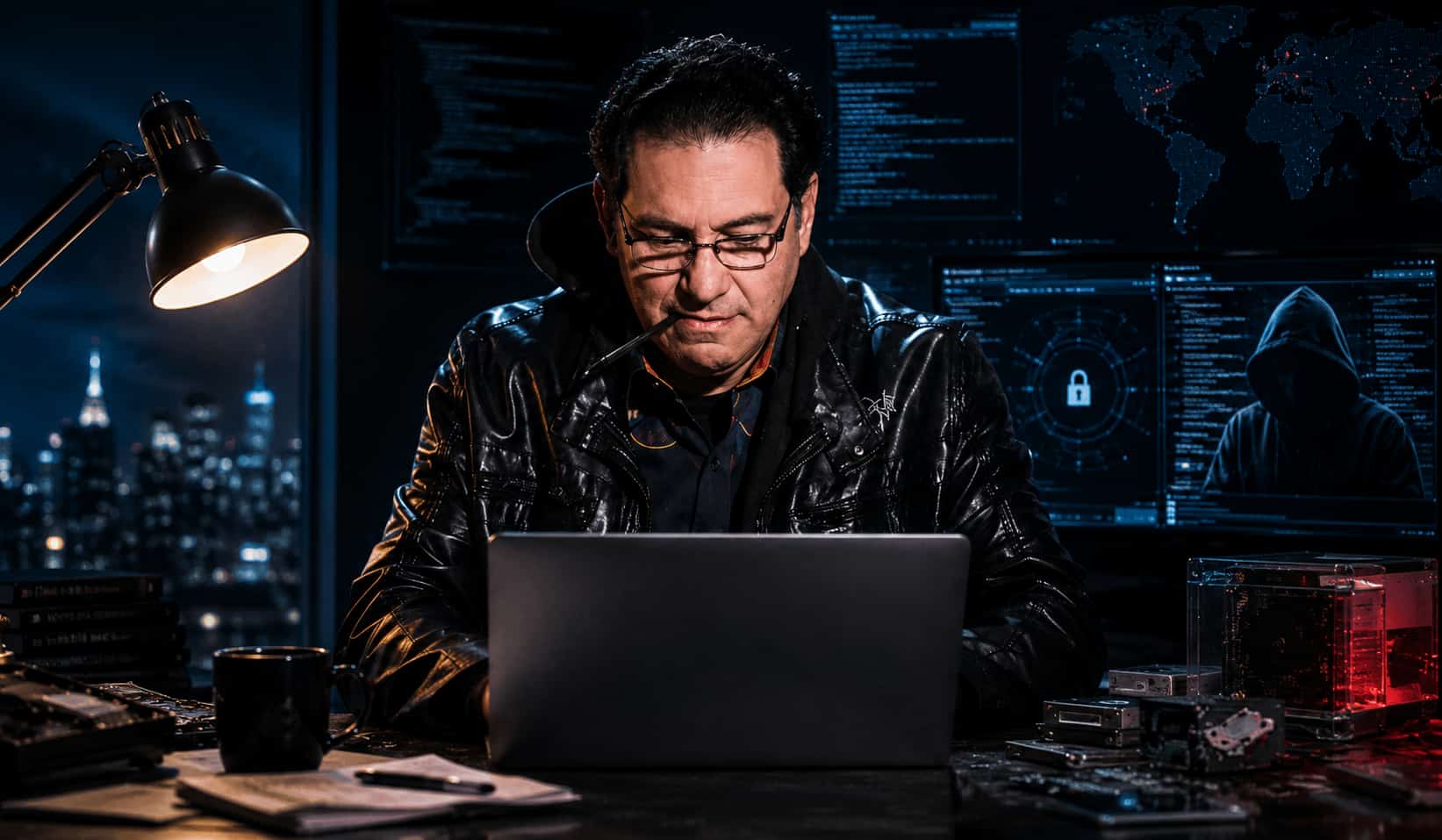
Kevin Mitnick spent years as the FBI’s most-wanted computer criminal, breaking into networks at Nokia, Motorola, Sun Microsystems, and Pacific Bell. But the uncomfortable truth in his own account of that era is this: most of his access didn’t come from exploiting code. It came from exploiting people.
He’d call an employee, sound confident, use the right internal jargon, claim to be from IT or a manager under pressure, and ask for what he needed. A password. A callback number. A “quick favor.” He called this social engineering, and he was so effective at it that prosecutors reportedly told a judge he could start a nuclear war by whistling into a payphone. That claim was absurd. But the underlying fear it revealed wasn’t: that a sufficiently convincing human voice can bypass almost any technical safeguard.
Mitnick spent the years after prison until he died in 2023 teaching companies exactly this lesson through his books and security consulting work: the strongest firewall in the world means nothing if someone can be talked past it.
Nowhere is that more true today than in financial fraud.
How Social Engineering Evolved into Modern Financial Fraud
The techniques Mitnick pioneered on landlines in the 1990s haven’t gone away. They’ve been repackaged for online banking, mobile payments, and messaging apps. The core move is unchanged: create urgency and get the target to act before they think.
A few patterns are dominating financial fraud across the US, UK, and Australia right now:
Bank impersonation scams -A call, text, or email claims to be from your bank’s fraud department, warning of “suspicious activity” and asking you to “verify” your account, move money to a “safe account,” or read out a one-time passcode. In the UK, this is often called authorised push payment (APP) fraud; you’re persuaded to send the money yourself, so it doesn’t look like a traditional hack.
Government and tax authority impersonation -Callers or emails pose as the IRS (US), HMRC (UK), or the ATO (Australia), claiming unpaid tax, a legal case, or a refund that requires “verification” of your bank details or an urgent payment via gift cards or crypto.
Tech support scams -A pop-up or cold call claims your computer is infected and remote access is needed to “fix” it; the access is then used to move money out of your accounts while you watch.
Romance and investment scams -Relationships built over weeks or months on dating apps or social media, eventually pivoting to requests for money, or introducing a “guaranteed” cryptocurrency or trading opportunity (sometimes called pig butchering scams).
Business Email Compromise (BEC) -Fraudsters impersonate a company executive, supplier, or solicitor/lawyer by email, asking finance staff to urgently change bank details on an invoice or wire funds for a “confidential deal.”
Every one of these succeeds the same way Mitnick’s calls did decades ago, not by breaking encryption, but by breaking judgment under manufactured pressure.
Why Social Engineering Works on Smart People
One of Mitnick’s most repeated points, later echoed across the security industry, is that social engineering isn’t about tricking gullible people; it’s about exploiting normal, healthy human instincts:
Trust in authority: we’re conditioned to comply when someone claims to be a bank, the police, or a government agency.
Fear and urgency: panic shuts down the part of the brain that would otherwise pause and verify.
Reciprocity and rapport: a friendly, patient scammer who “helps” you first earns the trust needed to ask for more later.
Technical intimidation: most people won’t challenge someone who sounds like they understand banking or IT systems better than they do.
None of this requires a single line of malicious code. It requires a script, a phone, and a target who hasn’t been trained to pause.
How to Build a Human Firewall Against Social Engineering Attacks
Mitnick’s later career was built on a simple premise: organizations spend heavily on technical controls and comparatively little on preparing people to recognize manipulation. The same gap shows up individually with financial fraud. A few habits close most of it:
a) Verify Independently, Never Through the Channel That Contacted You
If a call, text, or email claims to be your bank or a government agency, hang up and call the organization back using the number on the back of your card, or the official number from their website — never one given to you during the contact.
b)Authority Claimed Over the Phone, or Email Means Nothing on Its Own
Legitimate banks and tax authorities do not ask you to move money to a “safe account,” do not request one-time passcodes, and do not demand payment via gift cards, wire transfer, or cryptocurrency.
c) Urgency Is the Tell, Not the Threat
Legitimate institutions rarely require you to act within minutes. Pressure to skip verification is itself the strongest signal something is wrong.
d) No Legitimate Needs Your One-Time Passcode, PIN, or Full Card Details Ever
Not your bank, not “IT support,” not a “financial advisor” you’ve never met in person.
e) Treat Unsolicited Financial Opportunities with the Same Suspicion as Unsolicited Threats
Guaranteed investment returns, unexpected romantic interest that turns into financial requests, “insider” trading tips these use the same rapport-building playbook as impersonation scams, just with a friendlier tone.
What to Do If You’ve Been Targeted by a Social Engineering Scam
United Kingdom: Report to Action Fraud(or call 0300 123 2040), and contact your bank’s fraud line directly. Banks can sometimes recall an APP fraud payment if reported quickly.
In all three countries, speed matters; funds can sometimes still be frozen or recalled if reported within the first hours after a transfer.
Kevin Mitnick’s Lasting Lesson for Cybersecurity and Financial Fraud Prevention
Mitnick’s own transformation from the person exploiting trust to the person teaching organizations how to defend against it carried one consistent message: technology can be patched, but human trust has to be trained. Banks harden their systems every year. Fraudsters don’t bother trying to break them. They call the person holding the account instead, because it’s still the easiest way in.
The best defense against social engineering isn’t smarter technology. It’s a habit of pausing, verifying independently, and refusing to let urgency decide for you.
Cybersecurity Engineer with hands-on experience across SOC operations, threat detection, and offensive security, performing forensics and root cause analysis with documented runbooks and mitigation strategies. . Conducts vulnerability assessments and penetration testing, delivering VAPT reports and coordinating remediation.
Cybersecurity Engineer with hands-on experience across SOC operations, threat detection, and offensive security, performing forensics and root cause analysis with documented runbooks and mitigation strategies. . Conducts vulnerability assessments and penetration testing, delivering VAPT reports and coordinating remediation.
News
Security News & Threat Updates
Jul 30, 2026 |
Aug 05, 2026 |
4 min
|
634 views
Bank of Baroda Data Breach: 700 GB to 1 TB of Alleged Banking Data Leaked
Bank of Baroda data breach has placed India's banking sector under the...
Most breaches begin with a gap no one was watching. Tell us what you're protecting and our SOC analysts will pressure-test your defenses and show you exactly where you stand.
Level 17, TransAsia Cyber Park Kochi, Kerala-682030
Data privacy notice.
All submissions are protected via TLS 1.3 encryption in transit and
processed within our secure, air-gapped data environment. We never resell your data.






 For active security incidents only.
 Jul 23, 2026
 Aug 18, 2026
 6 min
6 min
 59 views