
The True Cost of 24/7 In-House Cybersecurity Operations in 2026

Your business is surrounded by sharks waiting to take a bite of confidential details that can be used against you. So, obviously, you’d invest in building your security team that can mitigate threats. As time passes, you are growing, and the need to cover your business day and night has become an utmost necessity. The question you may be sitting with right now is whether your existing team is capable of covering 24/7 or whether you should invest in a 24/7 outsourced cybersecurity team. There are various cost factors that you must consider, and we will be diving right into it.

The True Cost of Building an In House Cybersecurity Team

Businesses worldwide are expected to spend approximately $6.08 trillion on IT in 2026. This growth extends to cybersecurity and security hiring, with decision-makers projecting a 10–12% increase by the end of the year. As a small or medium organisation, planning how to accommodate a team within your budget range can be tricky. Let us break it down.

Cost ElementLatest Industry StatisticWhy It Increases In-House CostsSource
Security staffing33% of organizations say they do not have sufficient resources to adequately staff their cybersecurity teams.Organizations must continuously recruit or expand teams to maintain 24/7 coverage.ISC2 Cybersecurity Workforce Study 2025 (ISC2)
Recruitment65% of organizations have unfilled cybersecurity positions.Vacancies extend hiring timelines, increase recruiter costs, and leave existing teams understaffed.ISACA State of Cybersecurity 2025 (ISACA)
Talent shortage70% of security professionals expect demand for cybersecurity talent to increase.Higher demand continues to drive salary inflation and hiring competition.ISACA State of Cybersecurity 2025 (ISACA)
Professional development35% of organizations allocate dedicated budgets for cybersecurity professional development.Maintaining certifications and keeping pace with evolving threats requires recurring investment.ISC2 Cybersecurity Workforce Study 2025 (ISC2)
Skills gap95% of cybersecurity professionals report at least one critical skills gap within their teams.Organizations must invest in training, specialist hiring, or external expertise.ISC2 Cybersecurity Workforce Study 2025 (CyberSecurityStats)
Burnout & workload32% of professionals report being overworked because of workforce shortages.Burnout contributes to turnover, overtime costs, and reduced operational efficiency.ISC2 Cybersecurity Workforce Study 2025 (ISC2)
Retention32% cite lack of career growth as a major factor affecting job satisfaction, while 31% cite insufficient pay.Retaining skilled analysts often requires salary increases, promotions, and career development programs.ISC2 Cybersecurity Workforce Study 2025 (ISC2)
Continuous training81% of hiring managers say entry-level analysts require up to one year before becoming fully productive.New hires require significant onboarding and mentoring before delivering full operational value.ISC2 Hiring Trends Study 2025 (ISC2)
Operational risk88% of professionals experienced at least one significant cybersecurity consequence due to skills shortages.Understaffed or under-skilled teams increase incident risk, often resulting in higher response and recovery costs.ISC2 Cybersecurity Workforce Study 2025 (CyberSecurityStats)

Also read: In-House SOC vs. White Label SOC

Should SMBs Build an In-House SOC or Outsource Cybersecurity?

After considering the financial and operational demands of building an in-house cybersecurity team, many SMBs find themselves in a difficult position.

In House SOC or Outsource Cybersecurity

They recognise the need for continuous security monitoring but lack the budget to recruit multiple analysts, invest in enterprise-grade security tools, and retain experienced professionals. As cyber threats become more sophisticated and regulations continue to evolve, doing nothing is no longer an option. At the same time, building a fully operational 24/7 security function from scratch is often unrealistic.

Rather than expanding their internal security team indefinitely, SMBs should focus on strengthening their existing capabilities. Their internal IT or security personnel are often better utilised managing business-critical systems, overseeing governance, and driving security initiatives instead of spending nights and weekends responding to alerts. By allowing internal teams to concentrate on strategic priorities, organisations can improve both productivity and overall security maturity.

This is where offshore outsourced security services offer a practical advantage. Instead of hiring additional full-time employees, businesses gain access to experienced cybersecurity professionals who provide continuous monitoring, threat detection, incident investigation, and alert triage around the clock. The organisation avoids lengthy recruitment cycles, recurring training expenses, and the challenges of retaining specialised talent while still benefiting from enterprise-level security operations.

The financial benefits extend beyond reduced hiring costs. Outsourced security providers already have the required expertise, established processes, and mature security platforms in place, eliminating the need for businesses to make significant upfront investments in people and technology. As a result, organisations can convert large capital and staffing expenses into predictable operational costs that scale alongside business growth.

Also read : Top 10 Benefits of Partnering with a White Label SOC Provider

In House vs Outsourced Cybersecurity: Side by Side Comparison

CriteriaIn-House Security TeamOutsourced Offshore Security Services
Initial InvestmentHigh recruitment, onboarding, and infrastructure costsMinimal upfront investment with predictable onboarding
24/7 CoverageRequires multiple shifts, overtime, and additional headcountContinuous monitoring provided as part of the service
RecruitmentLengthy hiring process in a competitive talent marketImmediate access to experienced security professionals
Employee RetentionHigh risk of turnover and salary inflationNo recruitment or retention responsibility
ScalabilityHiring additional analysts can take weeks or monthsScale services up or down based on business requirements
Operational OverheadInternal management, scheduling, compliance, and performance monitoringProvider manages staffing, scheduling, and operational delivery
Cost StructureHigh fixed costs that increase with team expansionPredictable monthly operational expense

Is Outsourced Cybersecurity the Right Choice for Your Business?

Protecting your business shouldn’t drain your budget. Stop struggling with the high costs of recruitment, training, and retention for an in-house team. Switch to a smarter approach with outsourced cybersecurity services. Gain access to 24/7 expert monitoring, mature security platforms, and predictable operational costs, all while empowering your team to focus on strategic growth. Ready to secure your future for less? Contact us today to optimize your cybersecurity strategy.

Bank of Baroda Data Breach: 700 GB to 1 TB of Alleged Banking Data Leaked

Bank of Baroda data breach has placed India’s banking sector under the cybersecurity spotlight after researchers discovered a massive archive of allegedly stolen banking data on a dark web forum. The incident came to light after cybersecurity researchers discovered a large archive of allegedly stolen bank data being advertised on a dark web forum. Initial reports suggest the exposed dataset could range from 700 GB to 1 TB, making it one of the largest publicly reported banking data leaks in the country.

The leaked files allegedly contain a wide range of sensitive information, including customer details, Aadhaar information, account records, loan documents, internal audit files, and corporate banking data. While the authenticity and completeness of every leaked file are still being verified, the scale of the incident has raised significant concerns among customers, regulators, and cybersecurity professionals alike.

The breach serves as a reminder that even highly regulated financial institutions remain attractive targets for cybercriminals due to the volume and sensitivity of the information they manage.

How Did the Bank of Baroda Data Breach Happen?

The exact attack chain is still under investigation. Still, Bank of Baroda has stated that the incident originated from the compromise of an employee’s email account rather than its core banking infrastructure. According to The Hindu, there is currently no evidence suggesting that its core banking systems were directly breached.

Despite this statement, cybersecurity researchers have questioned whether the compromise of a single email account alone could explain the reported volume of leaked data. It is possible that attackers leveraged the compromised account to gain broader access to internal repositories, shared drives, or confidential documents before exfiltrating the information. Until forensic investigations are complete, the full extent of the attack remains unclear.

The stolen data was reportedly advertised and shared through dark web marketplaces and cybercriminal forums, where threat actors commonly sell or distribute stolen information. These underground platforms allow cybercriminals to monetise compromised data by selling it to other malicious actors, who may use it for financial fraud, identity theft, phishing campaigns, or further attacks against organisations.

Even when financial systems themselves remain uncompromised, the exposure of customer and internal business data can have serious

long-term consequences, particularly when the information is circulated across multiple threat actor communities.

also read: Coinbase Data Breach: Bribery Leads to USD 400 Million Loss

Bank of Baroda Responds to the Alleged Data Breach

Bank of Baroda responded by acknowledging that a cybersecurity incident had occurred while assuring customers that its core banking infrastructure had not been compromised. The bank stated that the breach was limited to

an employee’s email account and emphasised that customer deposits, banking operations, and payment services remained unaffected.

The organisation has initiated a forensic investigation to determine the full scope of the incident and is working alongside cybersecurity experts and relevant authorities. As part of its response, the bank has also implemented additional monitoring measures and is assessing the impact on affected individuals.

For customers, the bank has advised them to remain vigilant against phishing attempts and fraudulent communications that may exploit the leaked information. Security experts similarly recommend changing online banking passwords, enabling multi-factor authentication wherever possible, and monitoring accounts for any unusual activity.

Although investigations are ongoing, the incident demonstrates how quickly an initial compromise can escalate into a large-scale data exposure if privileged accounts or sensitive repositories become accessible.

also read: What the CDSL Malware Attack Teaches Organizations About VAPT?

What Businesses Can Learn from the Bank of Baroda Data Breach

Financial institutions are not the only organisations at risk. Every business that stores customer records, payment information, employee data, or financial documents has become a valuable target for cybercriminals.

Protecting financial data requires far more than perimeter security. Businesses should adopt a layered security strategy that includes strong identity and access management, multi-factor authentication, email security, continuous vulnerability management, regular security awareness training, data encryption, and continuous monitoring for suspicious activity. Limiting user privileges and implementing zero trust principles can also significantly reduce the impact of compromised accounts.

Game-Changing SOC Trends in 2026: AI, SOAR & XDR Shifts

Cybersecurity and threats are terms that affect not just businesses but also people and their privacy. Now that we know what the subject is, let’s get into the actual part- its growth and effect amongst internet users. SOC trends for 2026 have evolved in sophistication based on these factors. A compiled and comprehensive report from CrowdStrike showed the following statistics:

  • 30+ adversaries newly discovered and named,
  • The fastest recorded eCrime timed at 2 minutes and 7 seconds, and
  • 75% increase in cloud intrusions.

Cybercriminals are after your information mainly to gain access to financial information and/or use personal information to extort something. In the business world, it’s usually the latter for financial gain. In 2024, there was a substantial increase in reports of cyberattacks made by businesses and MSPs, which only shows an upward trend of how they’ll be demanded more in 2026.

Furthermore, SOC trends in the industry are predicted to create an uproar as they will be added as an extension to basic cybersecurity products.

Top Security Operations Center (SOC) Trends To Look Forward To In 2026

The future of Security Operations Centers (SOC) is evolving rapidly with advancements in automation, AI, and cybersecurity frameworks. Here are the key SOC trends in 2026:

  • Cloud Native SOC Services
  • Security Orchestration, Automation, and Response
  • AI and Automation 
  • Zero Trust Architecture
  • Quantum Computing and SOC Integration 
  • Proactive Threat Intelligence
  • Redefining Human Roles in SOC
  • Managed Detection Response
  • eXtended Detection and Response (XDR)

1. Cloud Native SOC Services

What is it? Businesses are shifting their work and data to more accessible and remote locations like the cloud. With such a shift comes innovation in SOC trends to introduce and develop cloud-based SOC services.

Cloud Native SOC Services

Cloud-native SOC services offer an expansive service to monitor, detect, alert, and respond to unusual activities spotted on the cloud. These services concentrate on the scalability, accessibility, and security of distributed IT environments while ensuring vulnerabilities are minimized to zero.

Why Does It Matter in 2026?The work environment has drastically changed, and moving forward, it will be more flexible, i.e., completely cloud-based and communicated. With such a revelation, here are all the reasons why cloud-native SOC services matter in 2026.

  • Scalable for Small and Medium Enterprises: MSSPs looking to offer their services to small and medium enterprises are shifting toward offering this SOC service. They offer flexibility without compromising security when the range of data and personnel is under a controlled cloud. 
  • Remote Management: As mentioned above, the remote environment of businesses urges MSSPs to offer secure and safe cloud management through SOCs.

2. Security Orchestration, Automation, and Response

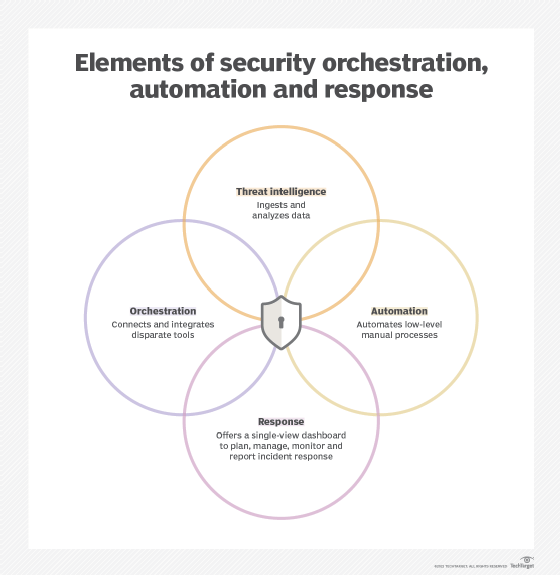
What is it?SOAR platforms are becoming a crucial part of SOC services. They define a definite path, protocol, and routine that helps engineers streamline their security processes efficiently.

security elements of security orchestration automation and response f mobile

Image source: Techtarget

Moreover, it effectively automates routine tasks and incident response, empowering human analysts to prioritize and tackle more complex and strategic activities.

Why Does It Matter in 2026?SOAR is highly relevant in 2026 due to the evolving complexity and volume of cyber threats, as well as the growing demand for efficiency in SOCs. 

  • Automation of incident responses: SOAR platforms are dedicated to simplifying tasks such as incident investigation, management, threat containment, and termination. With automation, more than half of manual tasks through every step are reduced. 
  • Streamline operations: SOAR platforms implement diverse security tools and systems into a simplified ecosystem, streamlining operations and improving efficiency. By consolidating data and performing advanced threat analysis, they enhance an organization’s security posture, improving visibility and enabling effective threat detection and response.

3. AI and Automation 

What is it?: As we know, the prominence of artificial intelligence has entered every industry, including SOCs. AI has been part of SOC trends and is fully fledged to operate multiple tasks at a time.

AI and Automation in soc

Through machine learning and automation, SOC services are looking at an optimistic, efficient, and minimal manual error.

Why Does It Matter in 2026? Organizations that have implemented AI and automation into their SOC services have already reported seeing more than a 50% reduction in response times and improved threat mitigation.

AI technologies can scan through vast amounts of data and networks to derive information about various anomalies that need to be addressed, and through automation, these anomalies can be mitigated efficiently, reducing delay at every step of the process. 

3. Zero Trust Architecture

What is it? Zero-Trust Architecture is highly being demanded within the MSSP industry, turning into a SOC requirement ready to take centre stage.

zero trust core principles

Image source: Gartner

This system assumes all networks to be hostile, enabling verification for every access made. It is designed to reduce the risk of data breaches and unauthorized access to sensitive data from known and unknown sources.

Why Does It Matter in 2026?: Threats don’t limit themselves to the size of an enterprise; they attack in every way possible. Zero-trust architecture, thus, becomes a crucial SOC tool that will help MSSPs assure their clients’ safety and security in the long run.

  • Constant verification: Threats can be internal and external. Continuous verification of users across all networks ensures all who access the system’s database are authorized users and free to use it.
  • Strengthen overall security: ZTA micro-segments the network, which reduces the potential impact of a breach. Since each segment acts independently, a breach is bound to not affect the entire network.

4. Quantum Computing and SOC Integration 

What is it?: One of the most innovative approaches in the SOC industry is quantum computing and resistant security. A method developed with cryptography to disable attacks from quantum computers.

Quantum Computing and SOC Integration 

These systems use post-quantum algorithms that are resistant to the immense computational power of quantum machines, ensuring secure encryption, authentication, and data protection.

Why Does It Matter in 2026? We can’t stress enough how hackers and attackers can go to any length to bring down an organization by accessing their sensitive information. In 2026, the growth of this threat will mostly come from large enterprises. 

  • Resistant Algorithms: Implementing quantum-resistant algorithms will become a key focus for SOCs, ensuring that encrypted data remains protected against the advanced capabilities of quantum computers. These algorithms are designed to safeguard sensitive information and prevent potential breaches in a post-quantum era.

Also Read: Top SOC Tools In 2026

6. Proactive Threat Intelligence

What is it? Proactive Threat Intelligence is a form of identifying threats through predictive insights. These are gathered and analyzed through sophisticated tools that are developed to mitigate real-time and quickly growing cyberattacks. 

Proactive Threat Intelligence

Why Does It Matter in 2026? To act upon cyberthreats, SOC services enable advanced SOC monitoring that works as intelligent and proactive threat mitigation.

  • Real-time threat identification: 2026 is looking at evolving variants of cyberattacks that are more difficult to deal with. Through proactive threat intelligence, the system can detect cyberattacks, respond to them, and offer immediate remediation. This action helps ensure organizational networks, systems, and servers don’t end up in unexpected situations.
  • Proactive Threat Strategies: Considering the level of threats every organization deals with, having reactive measures can only do a little help. By having objectives that are sector-specific, SOC engineers can concentrate and customize their services accordingly.

7. Redefining Human Roles in SOC

What is it?: As cyberthreats evolve, AI and human analysts are foresighted to work side by work and not replace one over the other.

Redefining Human Roles in SOC

A future of streamlining, speeding, and redefining the roles of human analysts in the SOC industry will shape their purpose in the coming years.

Why Does It Matter in 2026?: The evolution of AI and machine learning has brought the presumption that human analysts might get replaced, but this is far from the truth.

Human analysts have the capabilities to offer their services for higher-level tasks and are often stuck with routine daily work. These repetitive tasks can be automated with AI, while human analysts can take on more advanced tasks.

8. Managed Detection Response

What is it?: MDR basically assembles a team, apart from automation, to detect, analyze, and resolve any cyber threat on the network, endpoints, and systems.

Managed Detection Response

Relying solely on AI services is not a matter of present or future; it is a constant requirement to have human assistance side by side.

Why Does It Matter in 2026?MDR offers various benefits that take cybersecurity a long way.

  • 24/7 monitoring and response: Managed security service providers and SOC engineers ensure your networks and systems are constantly watched for potential threats and respond to them immediately.
  • Bridging cybersecurity skill gaps: With the growing needs of cybersecurity, there are few professionals and engineers in the market. Rather than contemplating the skill gap, get them managed through MSPs who offer quality MDR services.

Also Read: Top SOC Challenges in 2026

9.eXtended Detection and Response (XDR )

What is it?XDR is gaining quite the popularity for its holistic approach to enabling cybersecurity. Extended Detection and Response is a system where endpoints, networks, servers, and devices are connected to a single platform.

SCI XDR Solution CELA mandated Infographic copy update of 65 trillion daily signals?resMode=sharp2&op usm=1.5,0

Image Source: Microsoft

As a whole, it helps in detecting, investigating, and narrowing down the source of a threat in a unified manner.

Why Does It Matter in 2026?: There are multiple reasons why XDR is a growing SOC trend that will continue to evolve. 

  • Unified threat management: Cyberthreats attack from every direction. Through XDR, a unified platform can smartly detect cyberthreats’ routes and mitigate them efficiently without having to run around to find the source.
  • Automation for alerts: SOC engineers are often hung up on regular and time-consuming tasks. Through EDR, these tasks get automated, and alert fatigue can be resolved easily.

Secucenter’s Contribution To SOC Trends

As a budding SOC company, we are on the radar to onboard the latest innovation in our tools. We provide advanced SOC monitoring and SOC staffing to our clients who wish to add that extra layer of protection along with their current suite of cybersecurity. 

In 2026, we forecast a vertical expansion of SOC trends with new tools in the industry to aid our customers with a strong wall of defense and ensure their safety through and through.

Frequently Asked Questions

1. How does AI impact SOC operations in 2026?

AI will streamline major and minor SOC operations, making cybersecurity even more efficient and reliable. It enhances threat intelligence, finds threat pathways, provides intelligent threat response, and much more. 

2. What challenges do businesses face in modern SOC technologies?

One of the main challenges is the skill gap that was discussed above. Apart from that, modern businesses find difficulty with high implementation costs, keeping track of technological changes, and the wariness of cyber threats wandering the digital world. These concerns can be tackled by utilizing managed service providers who offer cybersecurity such as us.

3. How do you choose the right SOC service provider?

Choosing the right SOC service provider involves evaluating their expertise in threat detection and response, 24/7 monitoring, and the use of advanced tools like AI and SOAR. Consider their experience with your industry, scalability, reporting transparency, compliance support, and ability to integrate with your existing security infrastructure effortlessly. 

Protect Your Business Today To Scale Tomorrow

Most breaches begin with a gap no one was watching. Tell us what you're protecting and our SOC analysts will pressure-test your defenses and show you exactly where you stand.

Phone

+1 607 360 5504

Sales Office - United States

651, N Broad St, Middletown
Delaware-19709

Operations Center- India

Level 17, TransAsia Cyber Park
Kochi, Kerala-682030

Data privacy notice. All submissions are protected via TLS 1.3 encryption in transit and processed within our secure, air-gapped data environment. We never resell your data.